
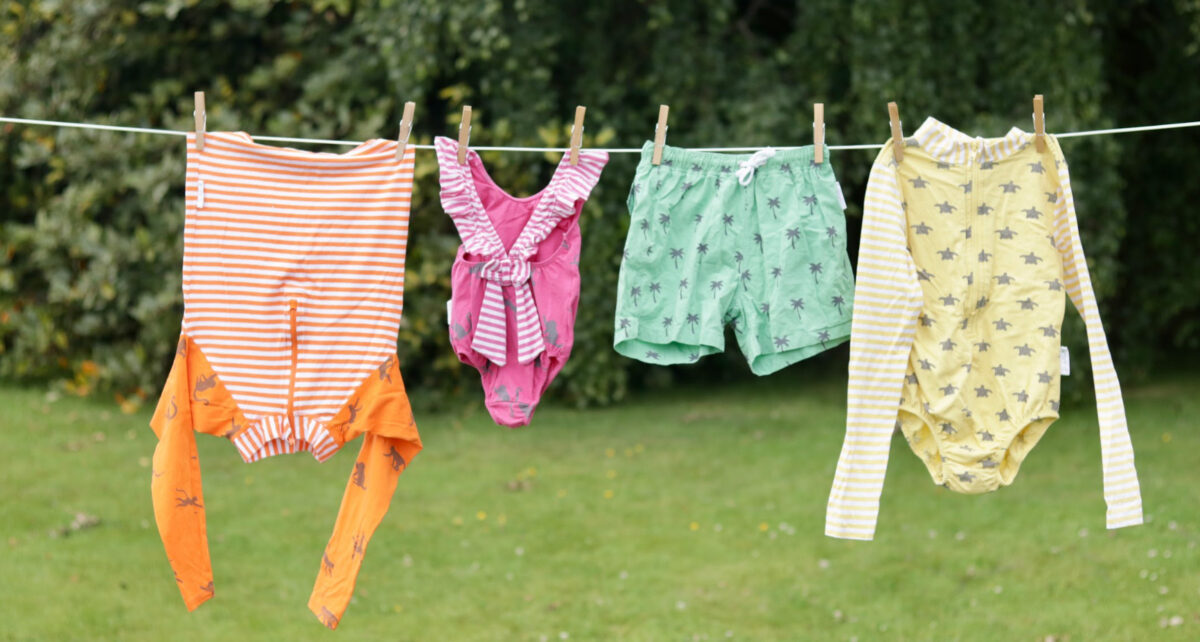
If your little one has eczema, frequent rashes, or just highly sensitive skin, choosing the right swimwear fabric is essential to minimise flare ups and maximise comfort.
Swimwear sits close to the skin, often for hours at a time, and is worn in hot, wet conditions that open pores and make delicate skin even more vulnerable. That’s why understanding the difference between synthetic and natural fabrics is crucial.
Why Synthetic Swimwear Is Bad for Sensitive Skin
Polyester and nylon are the most commonly used fabrics in mainstream swimwear. It’s cheap, stretchy, fast-drying and completely synthetic. Polyester is made from PET plastic (yes, like water bottles), polyester is derived from petroleum and treated with a mix of dyes, finishing agents, flame retardants, and softeners, many of which have been linked to skin irritation and allergic reactions. Nylon is a PA plastic made from a synthetic polymer. To improve the performance of the material, it often contains PFAS, BPA and formaldehyde, as well as other harmful chemicals.
In warm, damp conditions like swimming pools, the beach, or even just a garden paddling pool – these plastic fabrics:
- Trap
sheat and moisture against the skin, creating the perfect breeding ground for irritation. - Can cause friction and itching, particularly at seams or elasticated areas.
- Release
smicroplastics with every wear and wash, which can enter the skin or be absorbed through open pores. - Is non-breathable, meaning sweat and bacteria can accumulate, aggravating skin conditions like eczema or dermatitis.
Why Organic Cotton Is The Perfect Swimwear for Sensitive Skin
Organic cotton swimwear is made from natural, breathable fibres that are gentle on the skin and the planet. At Pure Earth Collection, our organic cotton swimwear is:
- Certified organic, meaning it’s grown and processed without toxic pesticides, herbicides, or dyes.
- Naturally hypoallergenic, making it ideal for children with eczema, allergies, or skin sensitivities.
- Breathable and temperature-regulating, keeping skin cool and dry, even on hot days.
- 98% organic cotton, 2% lycra, significantly reducing the risk of microplastic exposure.
It feels soft, natural and cool, even after long hours in the sun and water.
The Only ‘Downside’? Slightly Slower Drying Time
Unlike synthetic fabrics, which have performance chemicals added to it to make it ‘quick drying’ or ‘water resistant’, organic cotton swimwear is free from harmful chemicals. This means you may notice a slightly longer drying time compared to polyester or nylon swimwear. But in our view, this is perfect in hot countries as it keeps you cooler for longer after your dips, and in colder climates we’d always change out of our wet swimmers anyway.
Organic Swimwear Lasts Twice As Long
Another great benefit of our organic cotton swimwear is that it’s way more durable than the flimsy plastic fabrics. No bobbling, no shape loss, just a soft, breathable suit that loves your child’s skin as much as you do. So you can expect summer after summer of natural, non-toxic swims. The only evidence of time will be a very slight colour fade over several years of use, but this is no more so than conventional synthetic swimmers.
This video shows the very slight natural fade over 2 years of wearing our organic cotton swimwear
Real Talk: What Parents Are Saying about our Organic Swimwear
We’ve had customers whose children couldn’t wear regular swimwear without itching or red marks and have since made the switch to organic cotton with amazing results. One parent told us, “I don’t usually leave reviews but wow did this deserve one! My daughter suffers badly with eczema and we can never go swimming. When we’ve gone swimming in the past she’s had to wear long sleeve clothing head to toe due to swimsuits being polyester, but these swimming costumes are a game changer on our holiday. She didn’t flare whilst wearing them and found them super comfy. She also loved the cute patterns. Thank you so much, we will definitely be buying more.”
So, Which Fabric Is Best for Sensitive Skin?
Let’s recap:
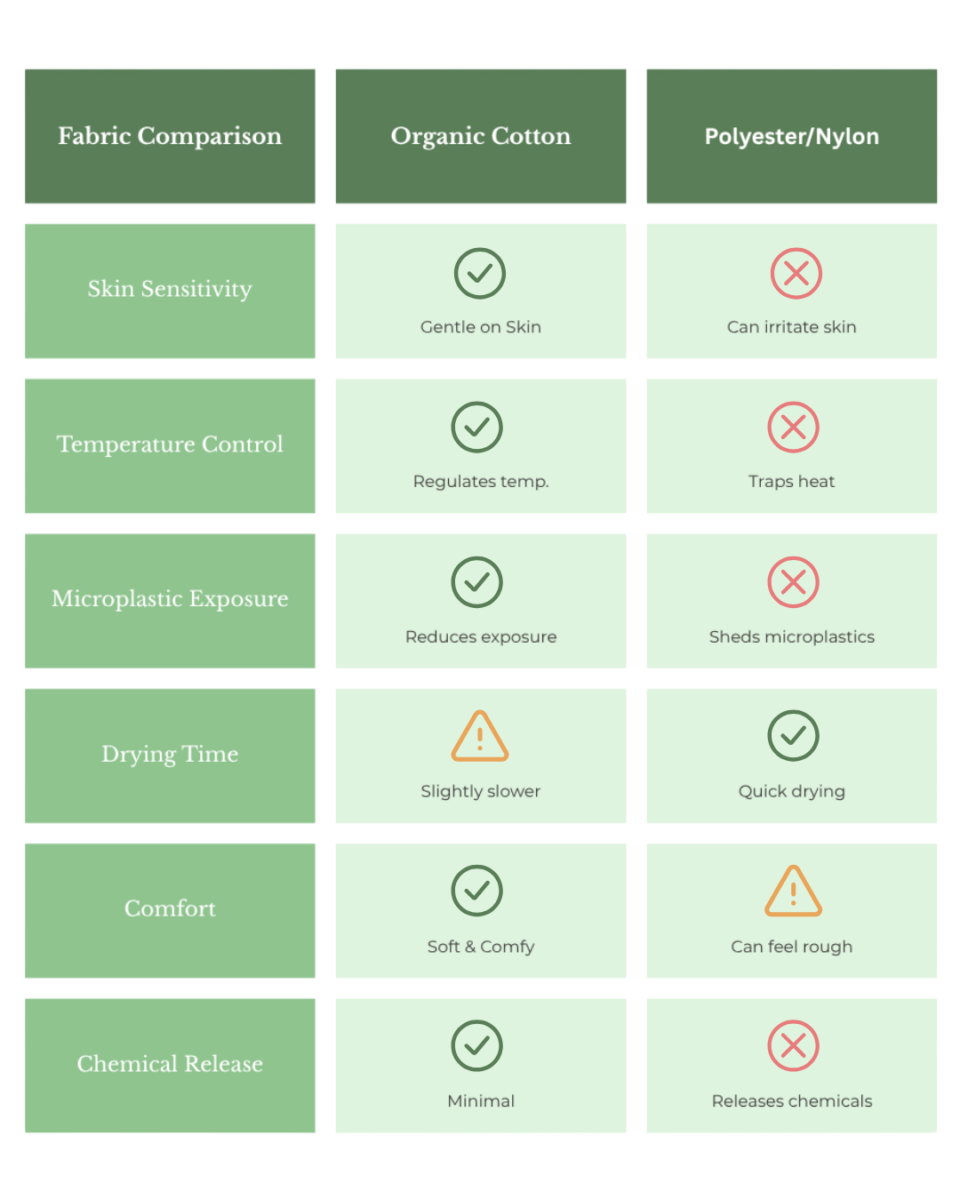
If your child struggles with skin issues, or you’re just trying to reduce their exposure to plastics and toxins, organic cotton swimwear is the safest, kindest choice for their summer adventures.